

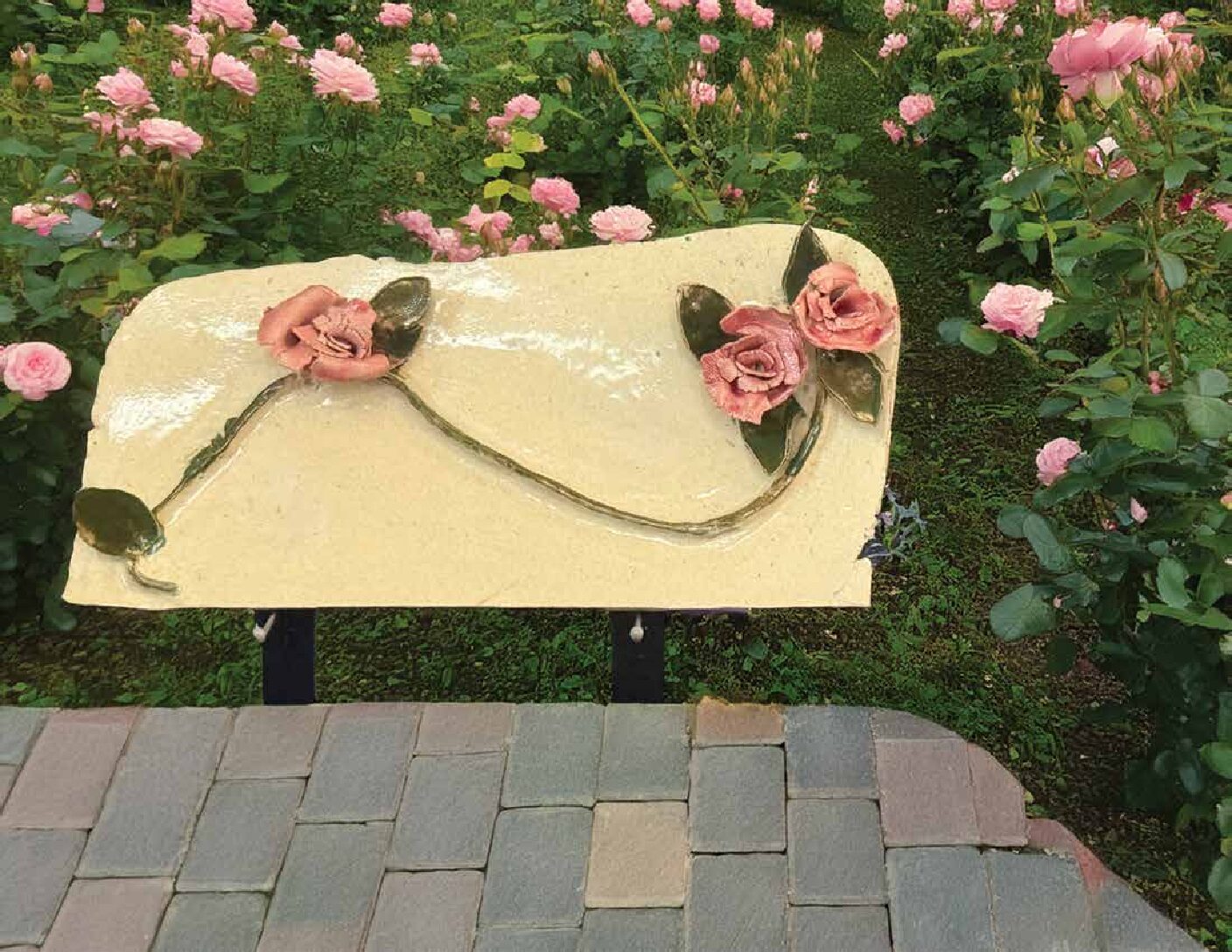
By Craig Morse, Morse’s Art Gallery
Have you ever pressed your palm against a cool glazed tile and felt, for just a heartbeat, that you were touching something older than yourself? I feel that every time I sit down with a fresh block of clay. That’s the quiet magic of ceramic wall art. Clay is earth, plain and humble, the same dirt I’ve known under my boots my whole life, and yet when it passes through fire it becomes something that can outlast empires. A painting fades. A print curls at the corners. But a fired piece holds its color like a promise kept, sometimes for thousands of years. When you hang a handmade ceramic wall hanging in your home, you aren’t just decorating a room. You’re joining a conversation that started when the first potter looked at a lump of mud and saw a story waiting inside it.
I think that’s why ceramic wall art stirs such deep feeling in people. It’s tactile in a way most wall art simply isn’t. You can see the thumbprint of the maker, the slight wobble of a hand-carved line, the place where the glaze pooled thicker and turned a deeper shade of blue. I’ll confess, a lot of those thumbprints on my pieces are mine, and I leave them there on purpose. They whisper that a real person sat at a real table, with dusty hands and a cold cup of coffee nearby, and poured hours of attention into one object. In a world of screens and mass production, isn’t that exactly what our hearts are starving for? This is the first chapter in a series from Morse’s Art Gallery, and today I want to walk you through where this art came from.
A Journey Through the History of Ceramic Wall Art
The story of ceramic wall art is a long, winding river, and every civilization that touched it left a little of its own color in the water. Historians generally agree that glazed tile and brick-making began in ancient Egypt, Mesopotamia and China. From those cradles the craft drifted outward along trade routes, carried by merchants, migrants and conquerors. What amazes me is how each culture reshaped clay to fit its own soul. Some used it to glorify gods, some to honor kings, and some simply to make a kitchen feel warm on a gray winter morning. Once you know this history, you’ll never look at a piece of decorative clay the same way again.
Mesopotamia’s Glazed Gates: The First Clay Wall Sculpture
Picture yourself walking toward ancient Babylon around 575 BC. Rising before you is a gate so blue it seems carved from the sky itself, and marching across it are dragons, bulls and lions, raised in relief and gleaming with glaze. Mesopotamian builders used glazed, colored bricks to create these reliefs, and the Ishtar Gate of Babylon remains the most famous example. In a way, it was one of the world’s grandest clay wall sculptures. It was propaganda, prayer and poetry all fused into one wall, a declaration that the city stood under divine protection. Stand before the reconstructed gate today and you still feel a shiver of awe. That shiver is the very feeling ceramic wall art has been chasing ever since.
Persian and Islamic Tilework
If Babylon gave ceramic wall art its thunder, Persia and the wider Islamic world gave it its music. Wall tiles came into use in Persia around the 9th century, and by the 13th century they covered the mosques and palaces of Islamic cultures. Imagine domes shimmering in turquoise and cobalt, every inch alive with geometric stars, vines that curl like smoke, and calligraphy that turns scripture into visual song. The 14th-century mihrab of the Madrasa Imami in Isfahan is often held up as a breathtaking marriage of calligraphy and ornament. These artisans worked with mathematical precision, yet the result feels anything but cold. And that influence didn’t stay put. It traveled into Europe through Islamic Spain and the Byzantine and Ottoman worlds, planting seeds that would bloom across a whole continent.
Delft, Talavera and Europe’s Love Affair With Clay
Spain became one of the great meeting places of East and West, and its ceramics show it. Spanish potters carried Islamic design forward for centuries, and towns like Talavera de la Reina, Toledo and Seville became famous for their work. That spirit later crossed the ocean, which is why Mexican Talavera still sings with such bold color today. Farther north, the Dutch fell head over heels for blue and white. Delftware wall tiles, each usually showing a single small painted scene, spread through Holland and across Northern Europe from the 16th century onward. Windmills, ships, children at play, even sea monsters danced across fireplaces and kitchen walls. Those humble tiles turned ordinary homes into tiny galleries, and honestly, isn’t that what good ceramic wall art has always done?
From Victorian Factories to the Arts and Crafts Revival
Every love story has its complicated chapter, and for ceramic wall art that chapter was the industrial age. The Victorian era brought mass production, making tile cheaper and more available than ever before. Suddenly tiles lined butcher shops, train stations and middle-class hallways. That was wonderful for access, yet something precious got lost in the hum of the machines. Many hand-painted tiles were torn out in favor of sturdier factory-made ones. Artists noticed the loss, and they pushed back. The Arts and Crafts movement and later Art Nouveau championed the maker’s hand again, celebrating flowing organic lines and honest craftsmanship. Whenever the world gets too efficient, people go looking for the warmth of the human hand all over again.
Why a Handmade Ceramic Wall Hanging Still Matters Today
Here’s what all that history tells me. Ceramic wall art has survived empires, wars and factories because people need it. We need walls that speak. Today, when I shape a handmade ceramic wall hanging or build a small clay wall sculpture in my studio, I feel the company of every hand that came before mine, in Babylon, in Isfahan, in Delft and in little workshops nobody ever wrote about. My pieces won’t stand on a city gate, but they might hang in your hallway and catch the morning light for the next fifty years. To me, that’s every bit as sacred. If you’d like to see what I’ve been making, you can browse my ceramic wall art collection anytime.
Coming Up Next
In my next post, I’ll bring you into the studio itself and walk you through how hand built pottery is actually made, from choosing the clay to that nerve-racking moment when the kiln door opens. Until then, look around your own home. You might be surprised how much history is already hanging on your walls.
Frequently Asked Questions
1. What is ceramic wall art? Ceramic wall art is any clay piece made to hang on a wall, from glazed tiles and plaques to sculptural reliefs. It’s shaped by hand or in molds, then fired in a kiln for strength and lasting color.
2. How old is ceramic wall art? Thousands of years old. Glazed bricks decorated Babylon’s Ishtar Gate around 575 BC, and tile-making traditions stretch back even further in Egypt, Mesopotamia and China.
3. What’s the difference between a ceramic wall hanging and a clay wall sculpture? A wall hanging is usually a flatter piece, like a plaque or tile, while a clay wall sculpture has more depth and dimension, rising off the wall in relief.
4. Does handmade ceramic wall art fade? No. Fired glazes hold their color for generations, which is one reason ceramic wall art has survived since ancient times.
5. Where can I buy a handmade ceramic wall hanging? You can browse my ceramic wall hangings at morsesartgallery.com.